
Showing posts with label Italy. Show all posts

Friday, September 17, 2010

Gorizia/Gorica, Italy

The beautiful town along the Italian-Slovenian border


Gorizia (Slovenian Gorica) is a lovely Italian small town, very picturesque, stretched along the border between Italy and Slovenia. Of course the town wasn't built so close to the border, the border was drawn here after WWII. The name "Gorizia" originates from the Slavic or old Slovenian "gorica", which means "small hill" (the meaning is same in modern Slovenian, too) and Slovenians still call this town Gorica. The name was probably given, because old Slovenians originally settled on the small hill above the modern city, where there's a beautiful castle today. The town name was first documented in the year 1001 as "Villa quae Sclavorum lingua vocatur Goriza" ("The village that in Slavic language is called Goriza", source).
Gorizia, first being a small village inhabited by old Slovenians, fell under the Austrian rule in 1500 and soon became a lovely small town and a melting pot of many cultures such as the Slovenian, Italian, Friulian and German. It became bigger, attracted more people and gained importance in this part of Europe. And then came the tumultuous 20th century, world wars, killings, emigration, the rise of fascism, nazism and communism and things started to change. I'm sIn 1910, 51% of Gorizia's population were Italian, 37% Slovenian and 11% German. Today most Gorizians are Italians, a very small percentage are Slovenians, while the German minority is completely gone. Today Gorizia is purely Italian, but when you walk around this lovely small town, you feel like you're in Italy, Slovenia and Austria at the same time. All these ethnic groups have left a big mark on modern Gorizia and so it's no wonder, that this town is so delightfully adorable.

Let me show you our trip to Gorizia/Gorica:
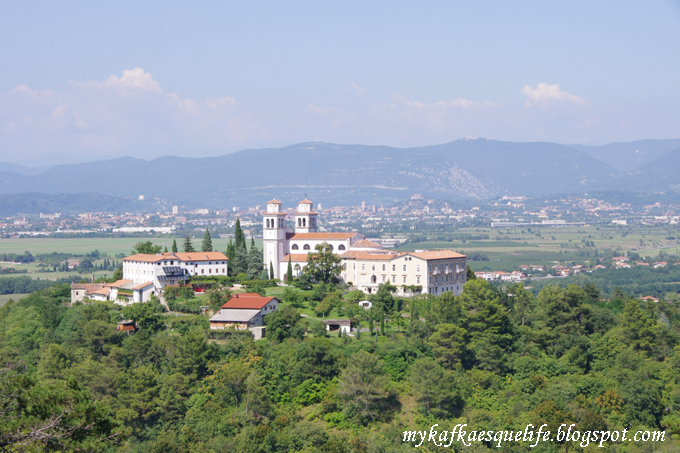
Our journey began in Trieste (Ita) and we passed by the scenic Miren castle (Slo). That's where we saw Gorizia for the first time (it's that bigger settlement in the behind).

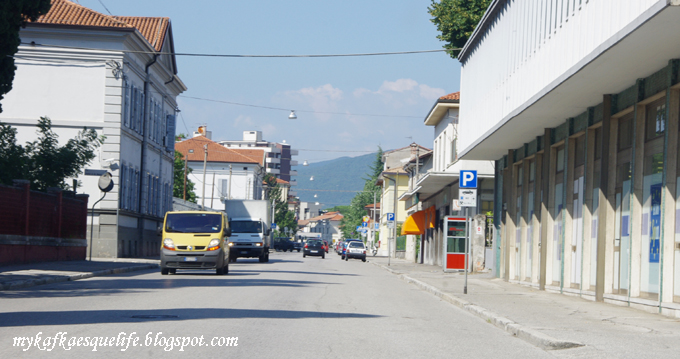
This area is very close to the Slovenian-Italian border.

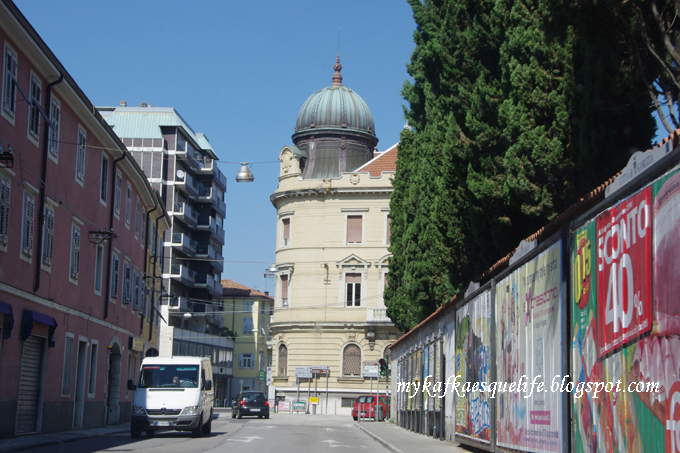
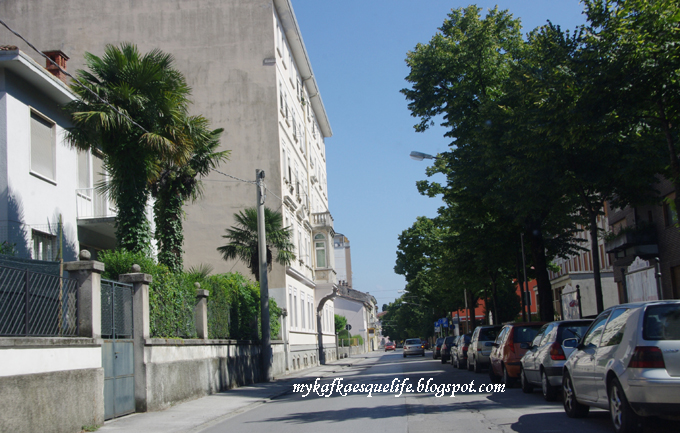
And we're inside Gorizia, somewhere in the suburban area.

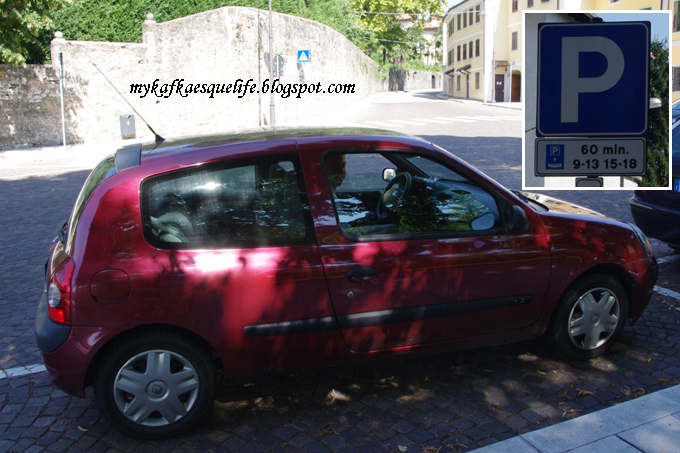
Closer to the old center, we started to look for a parking space.

And we found it! And since it was just over 15h, I could park here for free, how awesome.

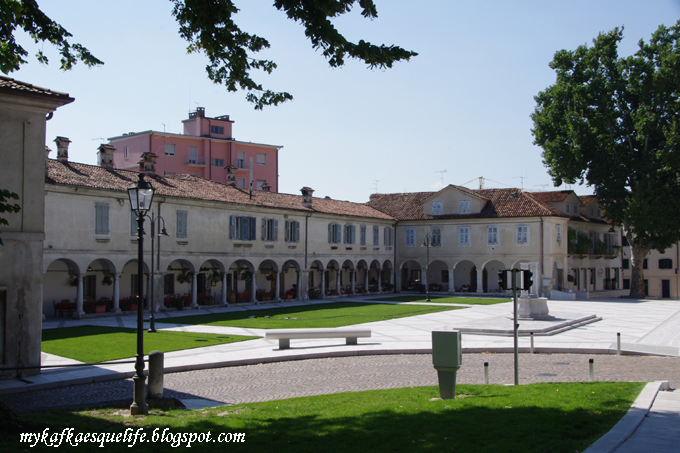
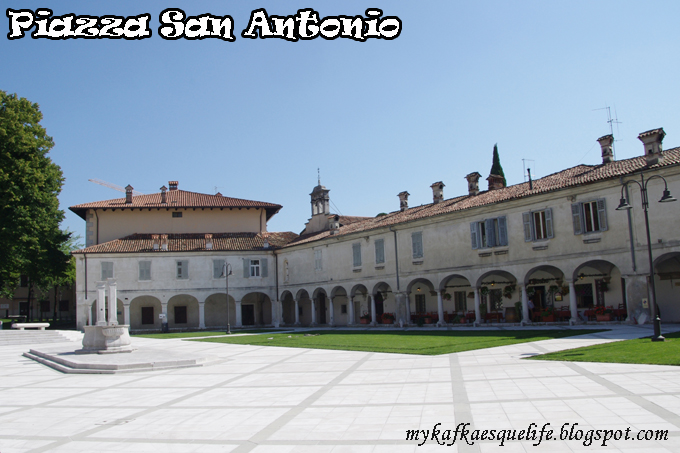
This part is called Piazza San Antonio (San Antonio square).

Still on the same piazza, this is the view on the other side.

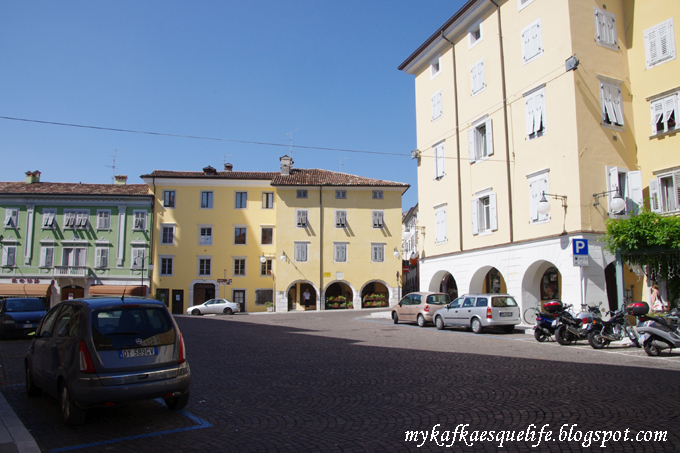
I was amazed, how clean and neat Gorizia looked like.

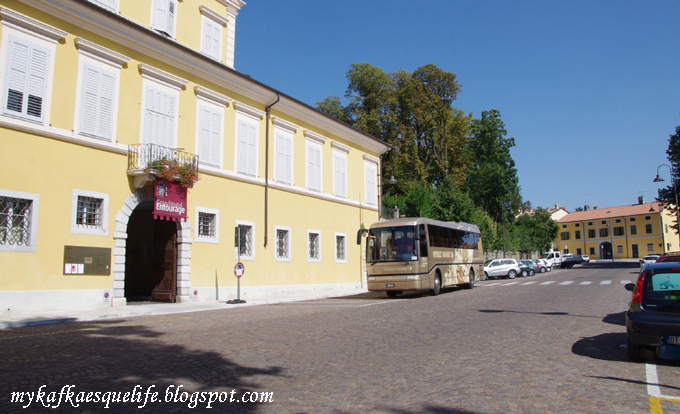
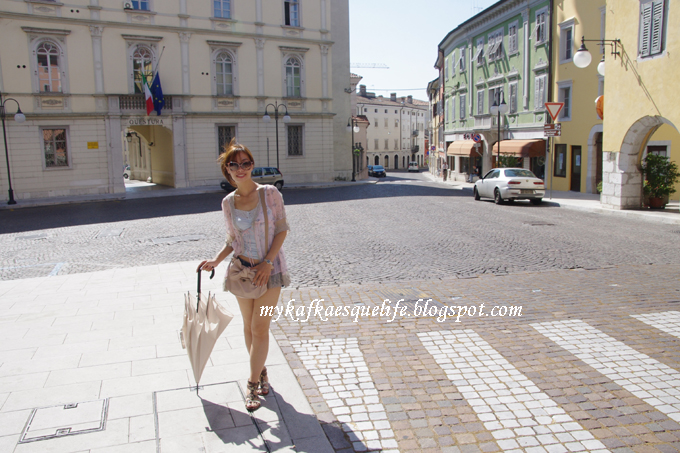
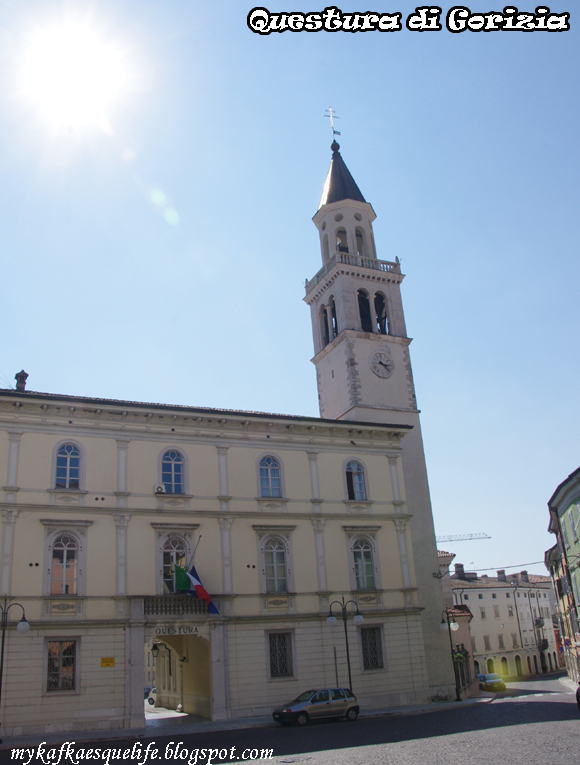
My girl posing in front of the Questura (a police office).

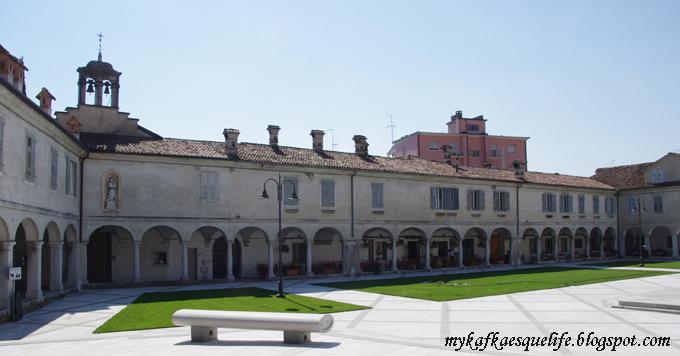
I was really impressed with Gorizia's old town. It's really so beautiful and also really well renovated. The only other thing, that surprised me, was that there was almost no people in the center. It was after 15pm, very hot and most of Gorizia was empty. Were people having a siesta? It was a Saturday, maybe Italians visit mama on that day? I don't know. I wonder, why so empty, though. Of course we had a good chance to make some nice pics, it was sunny and it felt like a museum. It's a pity, that we didn't have so much time to go to the castle and to see more of the old center. We had to see so much more that day and arrive in Ljubljana in the evening, so we were under a slight time constraint. But it was enough, though.
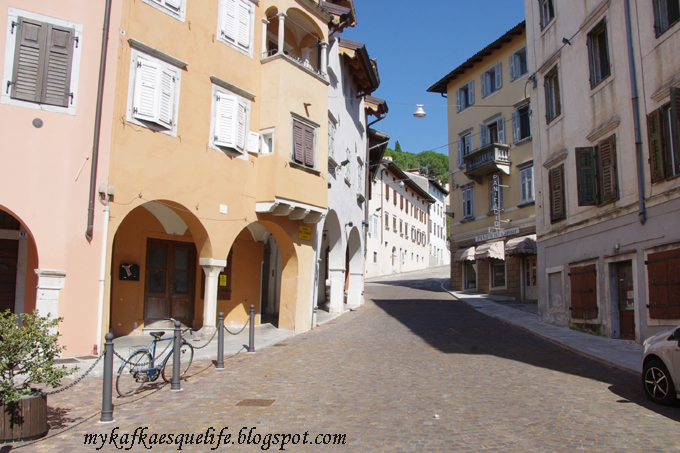
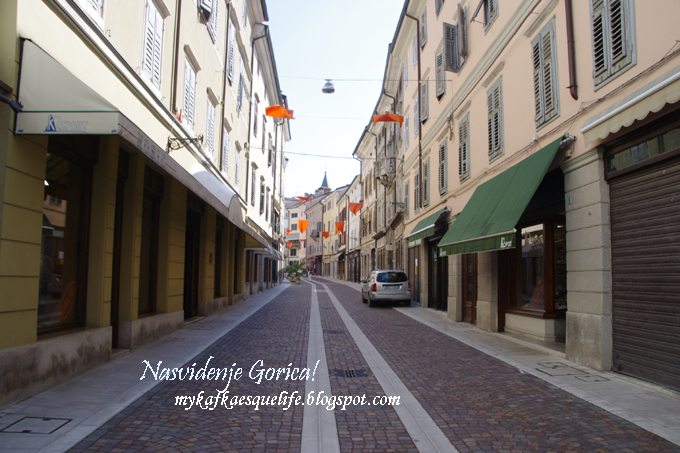
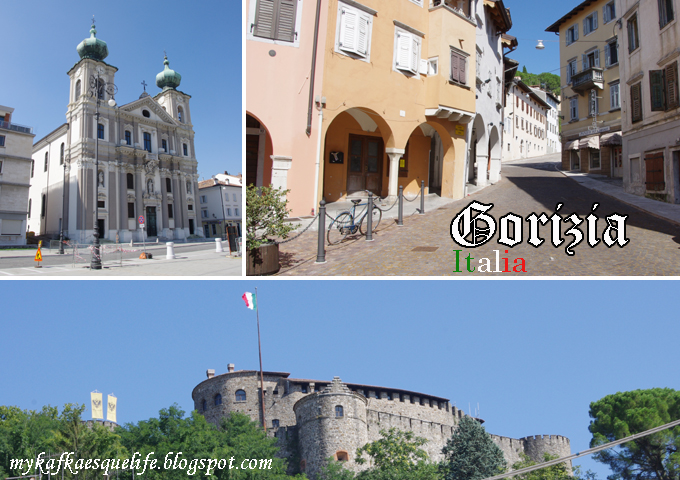
A lovely street in Gorizia's old center leading up to the castle.

This is like one of the main pedestrian areas in Gorizia: Via Rastello.

It looked so neat and clean. And there fas a Slovenian shoe shop named Kosič.

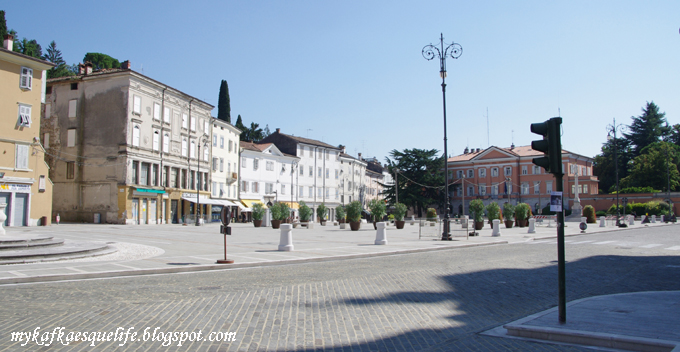
And then we came to Gorizia's main square: Piazza della Vittoria (Victory square). The Slovenians call this town square Travnik, which means "meadow".
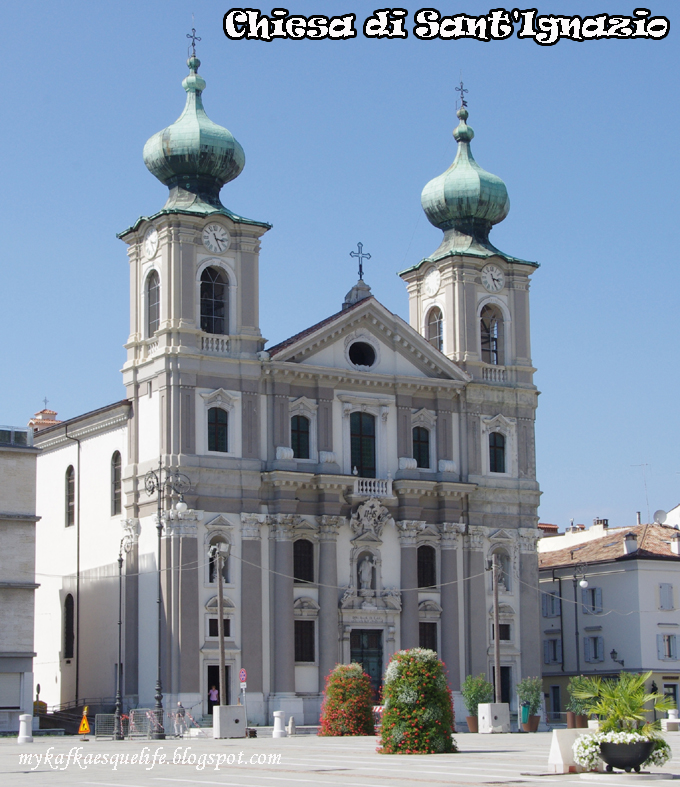
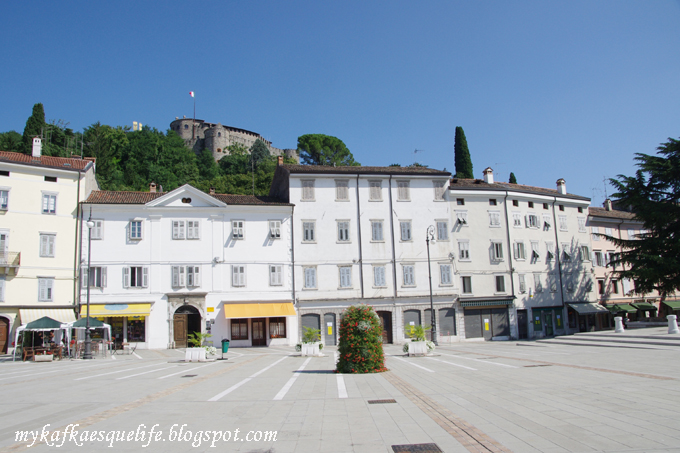
The Chiesa di Sant'Ignazio reminds me of Austria, so beautiful. More here>>

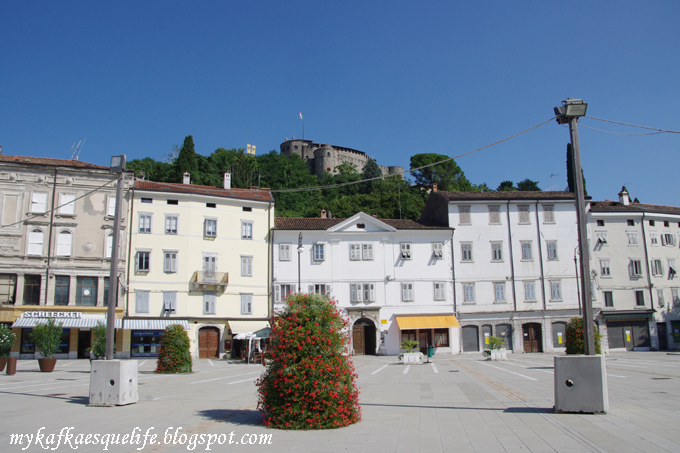
The other side of the piazza with beautiful old houses below the castle.

It's a pity that the square was so empty. The total opposite was Tartini square in Piran.

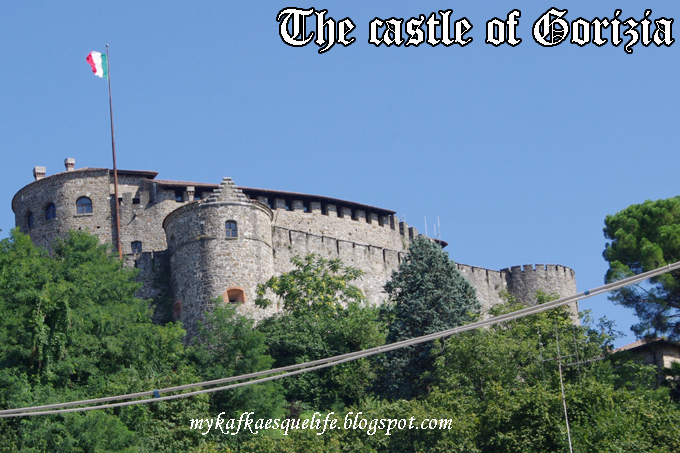
The Castle of Gorizia (Castello di Gorizia, Goriški grad) was rebuilt in the 1930s, because it was destroyed during WWI. It was restored to the version from the 16th century, more here.
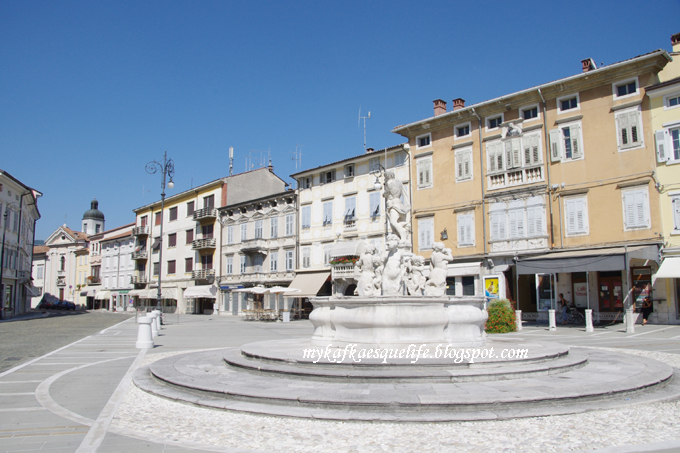
A lovely fountain.

The piazza della Vittoria from another angle.

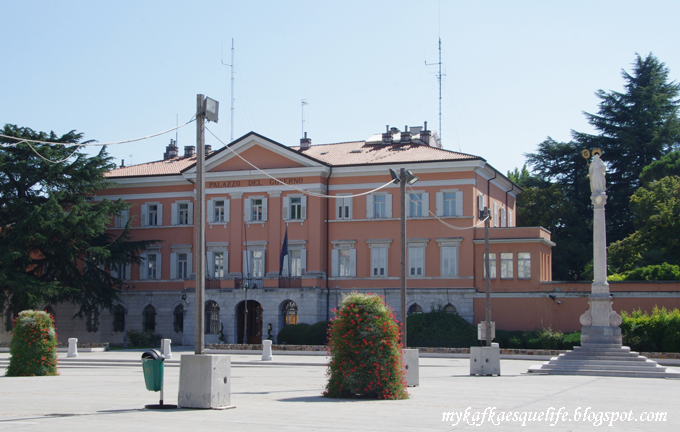
Palazzo del Governo.

Back to Via Rastello and back to the car...

We probably spent around 1h or less in Gorizia/Gorica and really enjoyed it, although the heat was nearly unbearable. That day was one of the hottest of the whole Slovenia trip 2010. But I'm glad we visited it, it was probably the most beautiful town we saw that day in Italy. I really recommend you to see it, if you happen to be in the area.

We left Gorizia pretty fast, just hopped on the other side of the border to the Slovenian town Nova Gorica (literally "New Gorizia"). That town was built after WWII (1947) to accommodate Slovenians, who escaped from Gorizia and Italy. More about that in my next post.

Hello Nova Gorica, hello Slovenia again!

My rating of Gorizia/Gorica:

Great place for photos ✰✰✰✰✰
Well preserved and clean ✰✰✰✰✰
Toilets, parking, souvenirs ✰✰✰✰✰
Friendly to tourists ✰✰✰✰✰

Miren castle :Before [Slovenia Tour 2010] Next: Nova Gorica>>

[All photos by MKL, 2010, except the map]

Wednesday, September 15, 2010

Trieste/Trst, Italy

Italy's second biggest port


Trieste (Slovenian Trst, we pronounce it as Terst) is a bigger city in Italy and very close to Slovenia, especially close to Koper, where we came from, before we arrived in this Italian coastal town. What is Trieste famous for? Well, it's currently the 2nd biggest Italian port (after Genova) and it's the most eastern city in northern Italy. Trieste has today around 208.000 inhabitants, but it used to have much more in the past. It lost about 1/3 of it's population in recent decades due to several reasons. Trieste used to be one of the most important cities in Europe few centuries ago, but because of the troubled 20th century, it lost its glory and a lot of population, especially the Slovenian. Trieste/Trst bears a special place in the hearts of Slovenians. It used to be the "biggest Slovenian town" in the past. If you want to know why, read the history part.

✰ History of Trieste/Trst

Trieste was known as Tergeste during the Roman times (1st cent. BC), which was the first documented name of the settlement. Interestingly, the name's origin is based on terg- or trg-, which means market in Slovenian and other Slavic languages. After the Roman period, Trieste fell under the rule of several tribes and kingdoms. If you remember from my previous posts, the Slovenian coastal towns Koper, Izola and Piran came under the Venetian rule in the early middle ages, where they flourished, but Trieste on the other hand had fought wars with Venice and refused to accept their domination (although it briefly succumbed in 1369). That spat with Venice led to a petition, where the people of Trieste requested to come under Austria's rule, which subsequently happened in 1382. Trieste remained under Austria until 1918 and so were most parts of Slovenia at that time.

✰ Trieste/Trst and Slovenians

Trieste was for centuries connected with Slovenes. The whole hinterland was always populated by Slovenes and that's true even today. First Slovenes started to settle in the city already in the middle ages and the population peaked in 1910, where Slovenians made 25% of the population of Trieste (which was nearly 60.000 people). At that time Trieste was called "the biggest Slovenian city" (Ljubljana at that time had around 57.000 people and not all of them were Slovenians). In the early 20th century Trieste was home to a lot of Slovenian writers, academics and artists, who left a strong mark on the modern Slovenian culture.

After Trieste came under Italy in 1918, the Italians started to treat the Slovenians (and all other minorities such as Germans and Croats) badly. The rise of the Italian nationalism and fascism with Benito Mussolini in charge led to a forced Italianization of all non Italian minorities. That meant that all names were changed into Italian. If your family name was Antončič, it was changed (or translated) to Antonelli. But not only that, they even changed the family names of Slovenians on gravestones, in order to erase 1000 years of history. Along with this, Slovenian banks and schools were closed. Our teachers and clergymen were forced to leave Slovenian areas and were replaced with Italians (source: Bernard Meares - Slovenians in Trieste). Nationalist gangs, who terrorized and attacked Slovenians, were encouraged by the local government, which led to a tragic event in the history of Trieste: In 1920 they burnt down Narodni dom, a cultural community hall of Slovenians in Trieste (see a photo here). All that forced many Slovenians to exile, especially intellectuals. A lot of them emigrated to North America (in 1971 only 5% of the population of Trieste were Slovenians), today it may be even less.


✰ "Trst je Naš!"

In Slovenia you may find a lot of "Trst je naš!" graffiti. It means "Trieste is ours!" and relates to 1945, where the Yugoslav army (with many Slovenian soldiers) liberated Trieste from German nazis and intended to claim Trieste/Trst as part of Yugoslavia (and subsequently Slovenia). That did not happen, but still many Slovenians today feel it should have.
The Yugoslav army stayed in Trieste and controlled it for 40 days, until they ceased the control to the British and American army. During these 40 days many Italian fascists and nationalists as well as German nazis were tried and prosecuted, a lot of them were killed and disappeared. That was a kind of retaliation for the atrocities before and during the war made by Italians (suppression and forced Italianization).

I don't condone any of the actions made by either side of course and I deeply regret, that so much blood was spilled in those times. I can actually hardly understand them from the perspective of 2010, but those were different times and I'm glad they're over. There are of course many sides of the story, Slovenians have their own version, so have the Italians. And Trieste belongs to whom today? It became part of Italy in 1954, when the joint British-US administration ceded the city to Italy, while Koper, Izola and Piran became part of Yugoslavia (and subsequently Slovenia). A lot of Italians from these Slovenian coastal cities moved to Trieste, while some Slovenians, that came under Italy, moved to Yugoslavia. Trieste lost a lot of Slovenians, while Koper, Izola and Piran lost many Italians. And both groups lived in peace and side by side for centuries. It's really a pity.

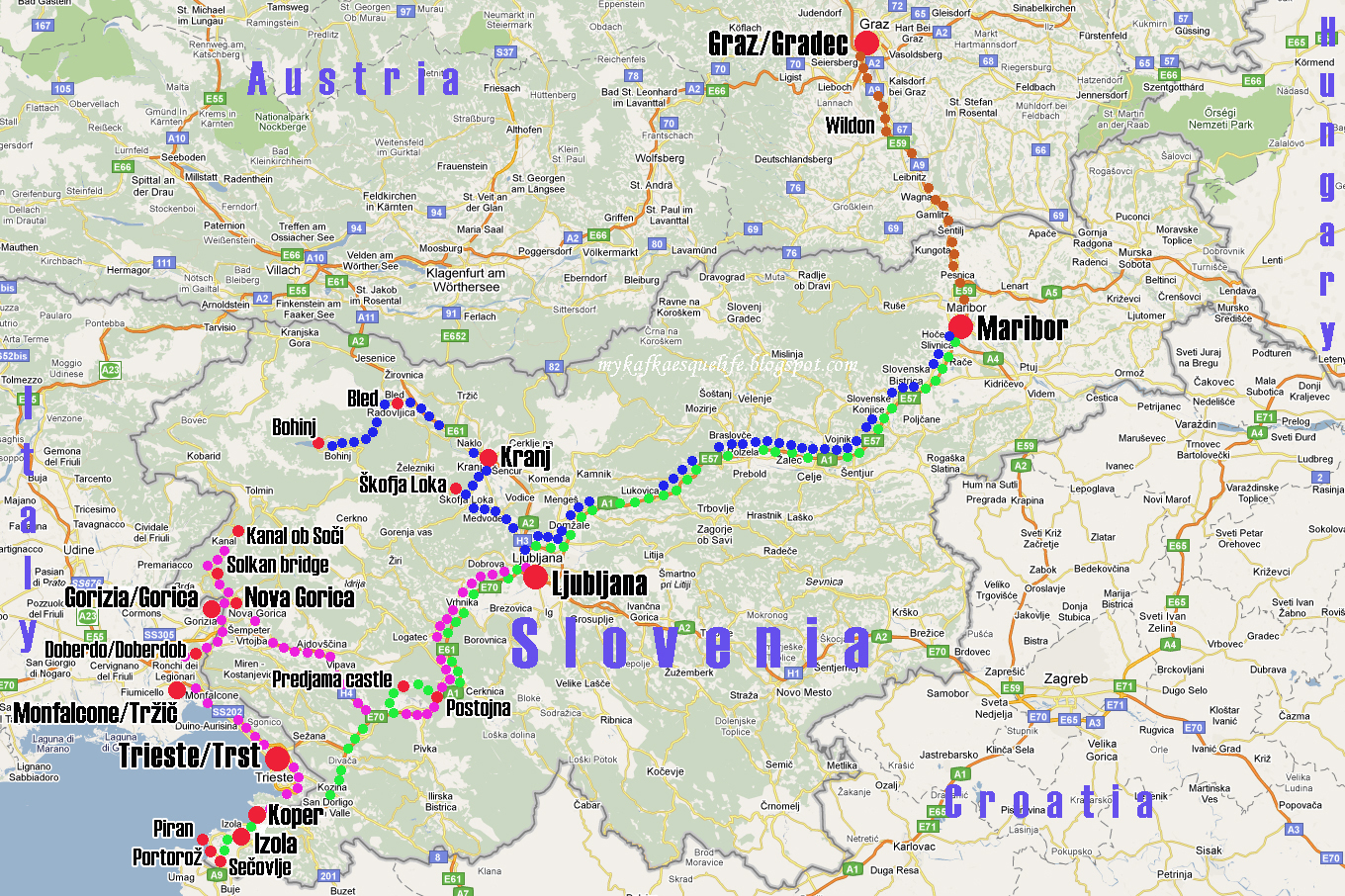
I think in the end, everybody lost. Trieste lost it's natural hinterland, because of an unnatural border (see map), while Slovenians lost their cultural and economic center. There is still a lot of Italian nationalism in Trieste today, as well as an anti-Slovenian atmosphere. On the other hand, many Slovenians look at the Italians in the area with contempt. The wounds have not fully healed, even though 65 years passed since the World War II ended. I hope the people forgive each other and their forefathers, but never forget what happened.

✰ Our Trieste

After the smooth ride from Koper to Trieste, I parked the car near the center and we started to walk around and explored the city. Being a Slovenian and knowing the bloody history of the 20th century, I felt a little uneasy about driving and walking around Trieste. But guess what? Nobody horned, nobody cursed me, I had no problems at all. Maybe I was just lucky, because it was in the middle of a scorching day and the city seemed almost empty. And we only spent like 2 hours in Trieste and didn't even eat here. So no funny restaurant stories this time.

This is the Trieste, as we saw it on that hot summer day in August:

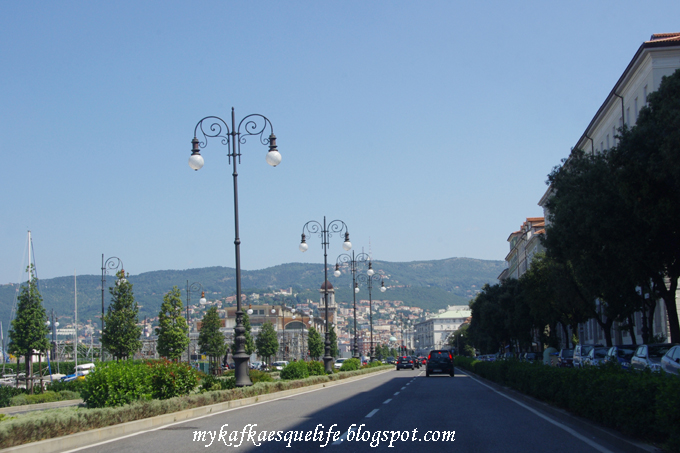
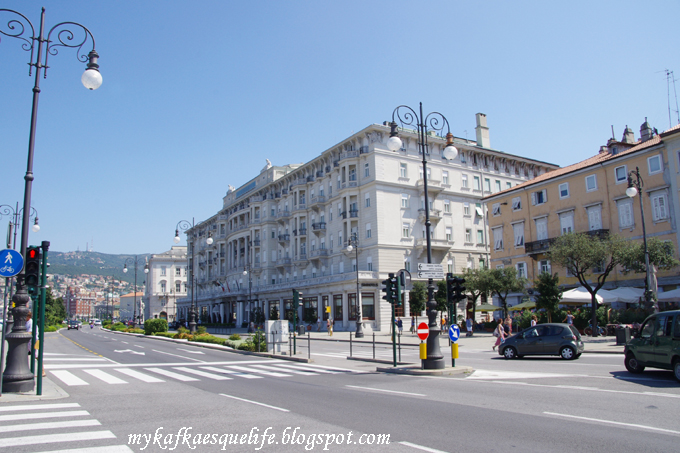
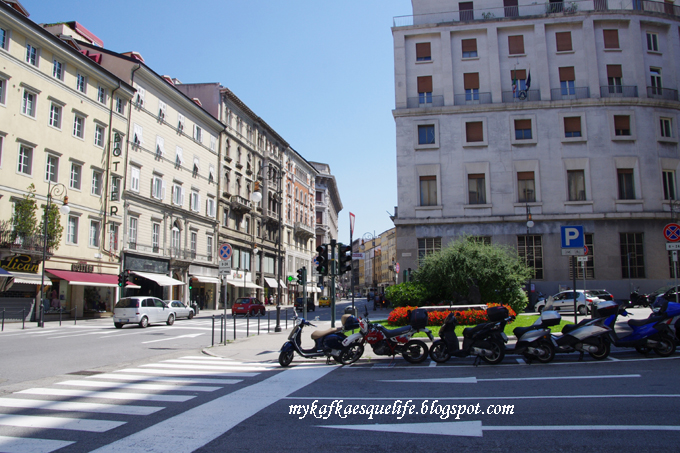
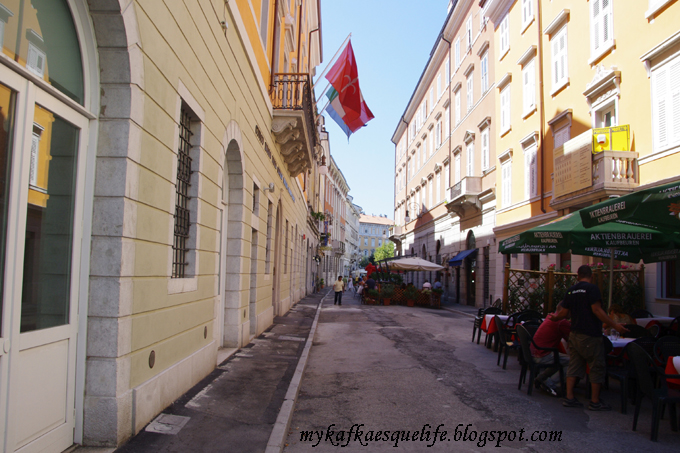
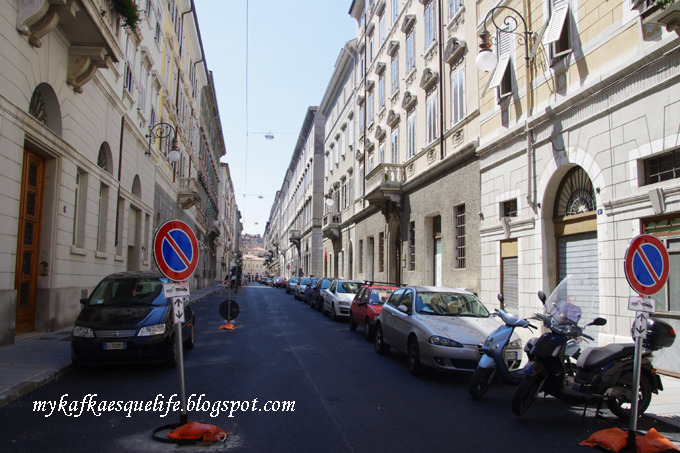
The main road, that leads from southern to northern Trieste and passes the center.

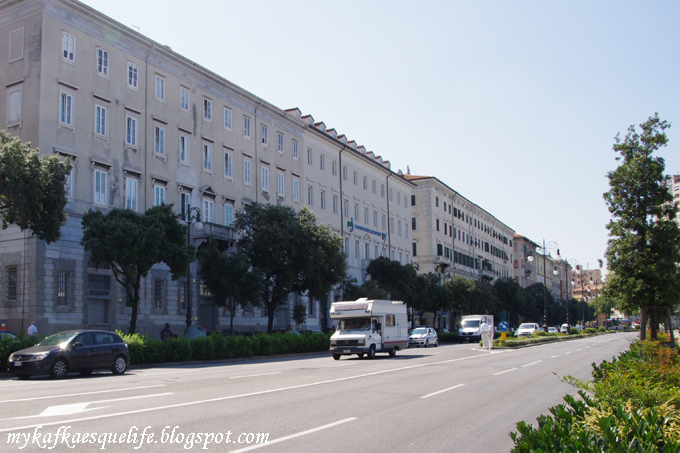
The buildings here are massive.

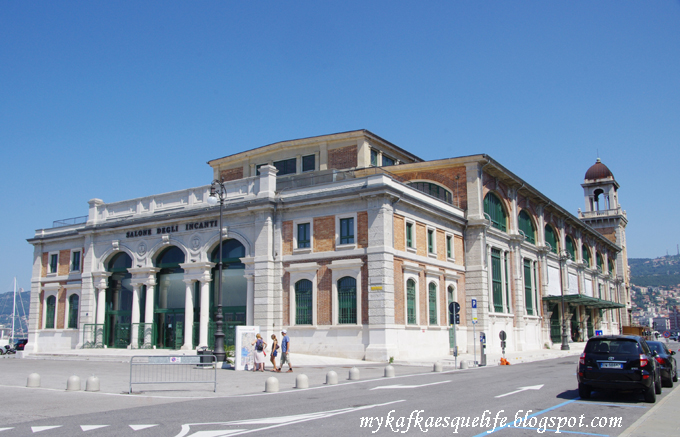
A nice building caught my eyes: Salone degli incanti (exhibition space).

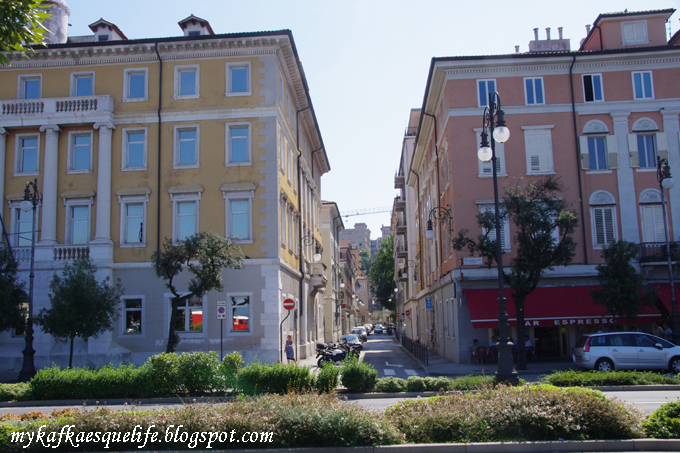
A view inside of a part of Trieste's central area.

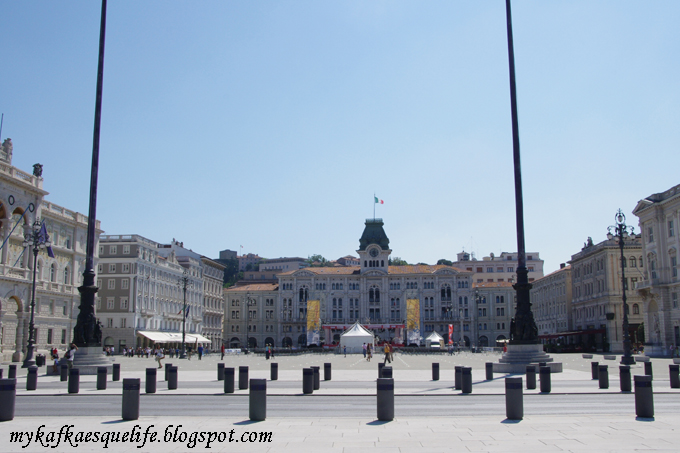
We were headed to the majestic Unity Square.

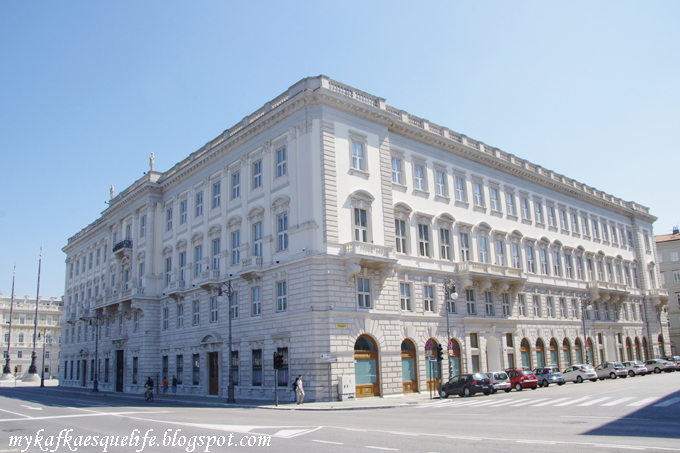
A majestic palace.


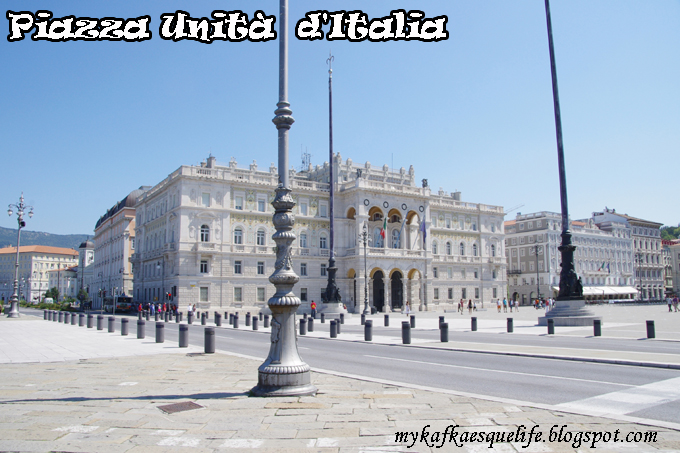
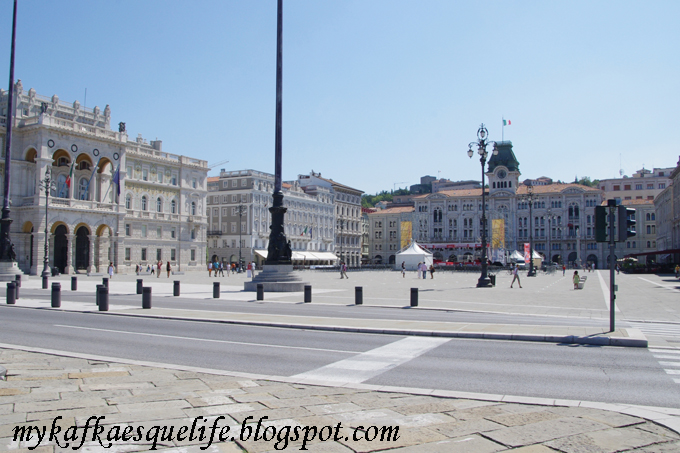
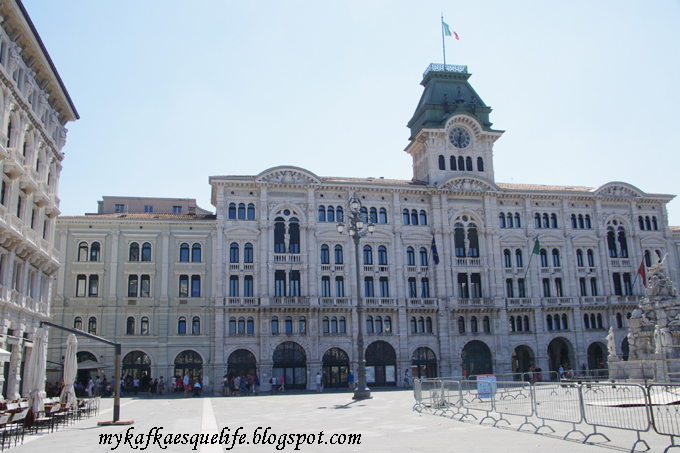
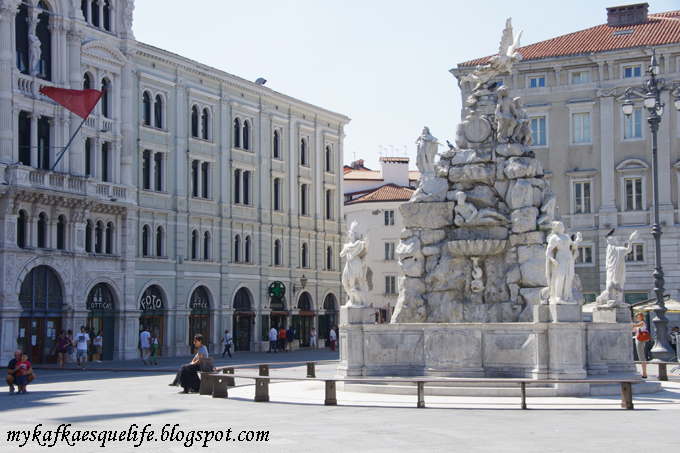
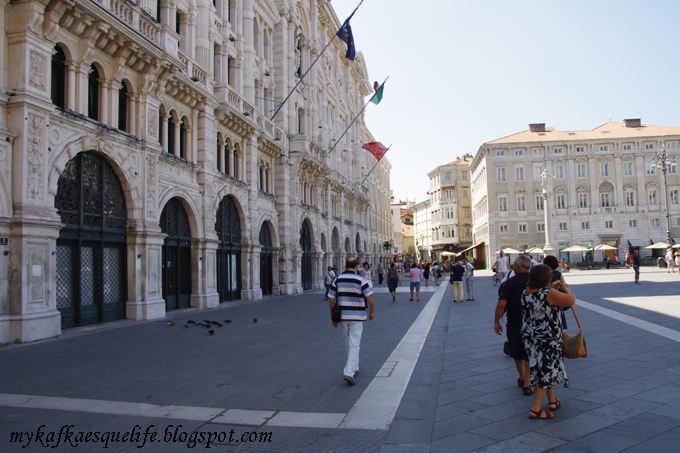
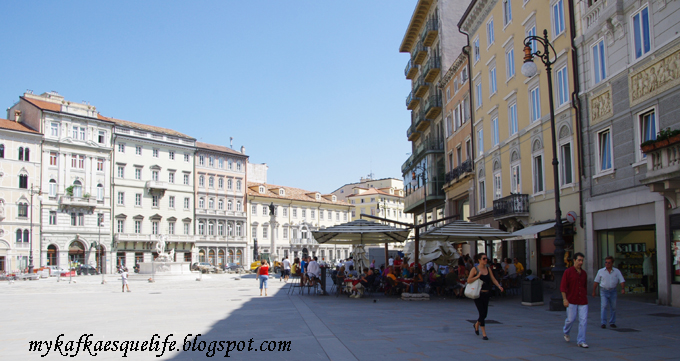
Piazza Unita' d'Italia (Italian Unity Square) is in Slovenian called Veliki trg (Great square), because of the square's old name Piazza Grande. This public square is huge! It's the 6th biggest square in Italy and the main square in Trieste. It's really majestic and gives you a big city feeling, although some other parts of Trieste feel like a small town.

Piazza Unita' is full of historic palaces.

There are two huge flag poles in the square called "I pili portabandiera".

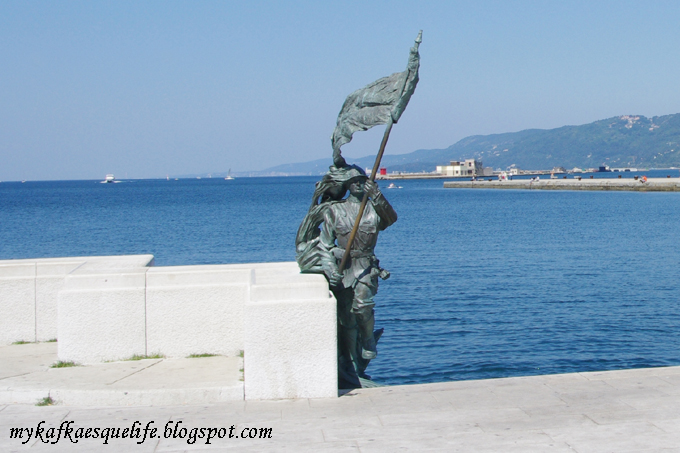
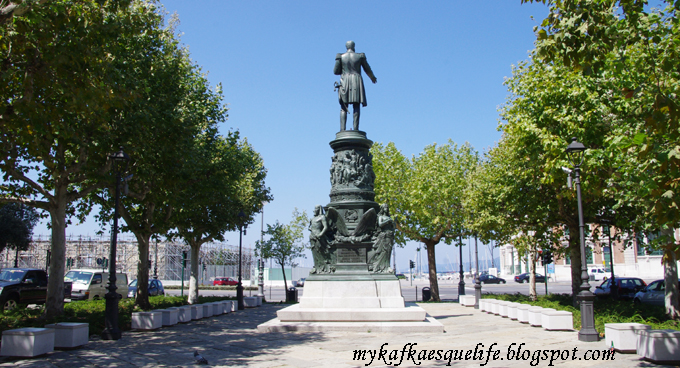
A bronze statue near the sea.

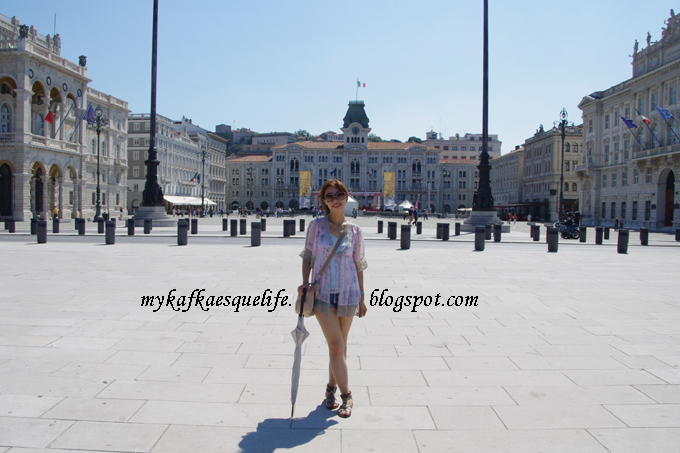
My girl on the Piazza Unita' d'Italia in Trieste. She totally rocks it ;-)

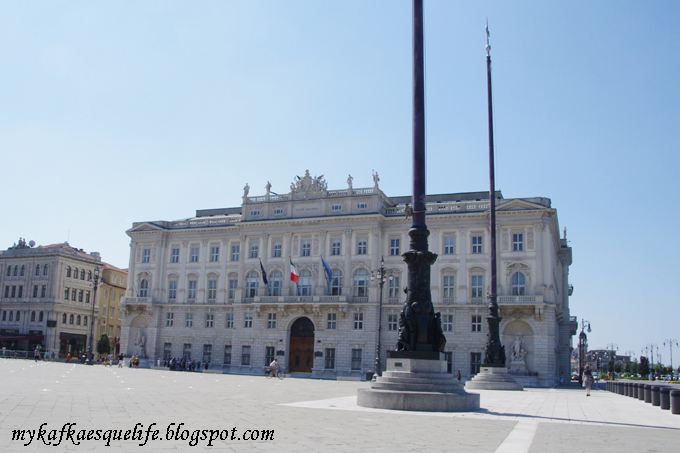
Lloyd Triestino palace.

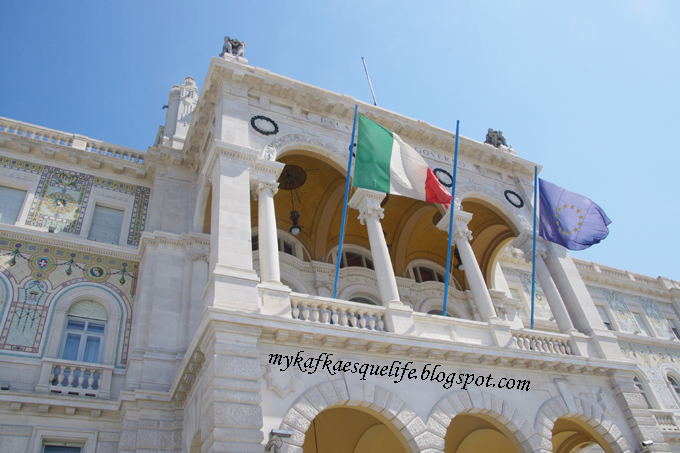
La Prefettura, the seat of the local government.

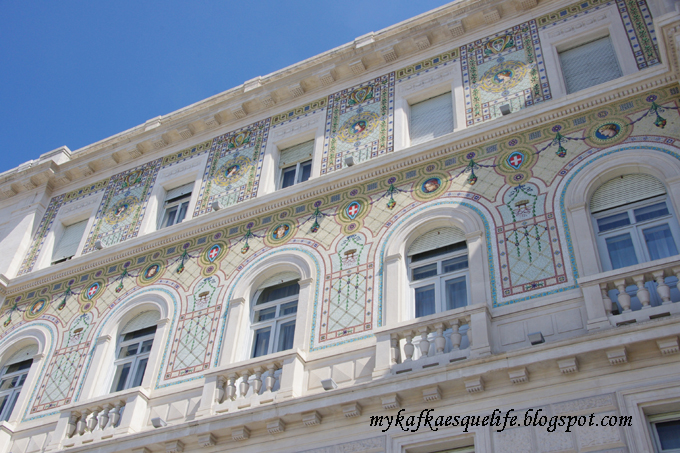
La Prefetture closeup.

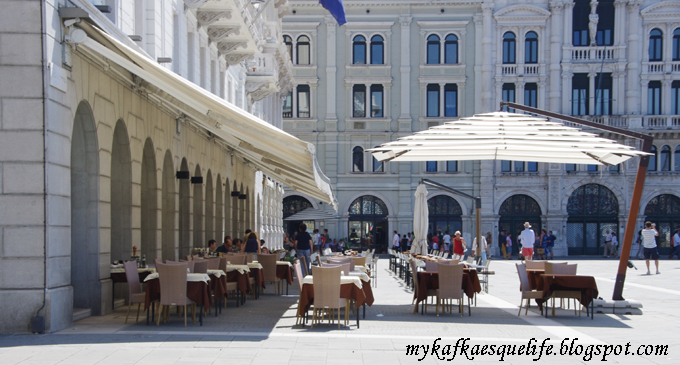
A café on the Piazza Unita'.

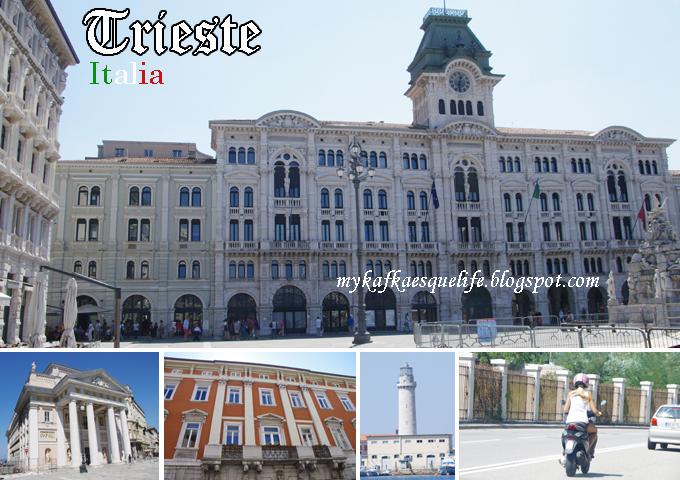
The town hall of Trieste from close.

The town hall is called "il Palazzo del Comune" in Italian.

A huge fountain named "La fontana del bergamasco Domenico Mazzoleni"

Near the town hall is a famous spot for pigeons.

We walked on to another square nearby, which is full of cafés and boutiques.

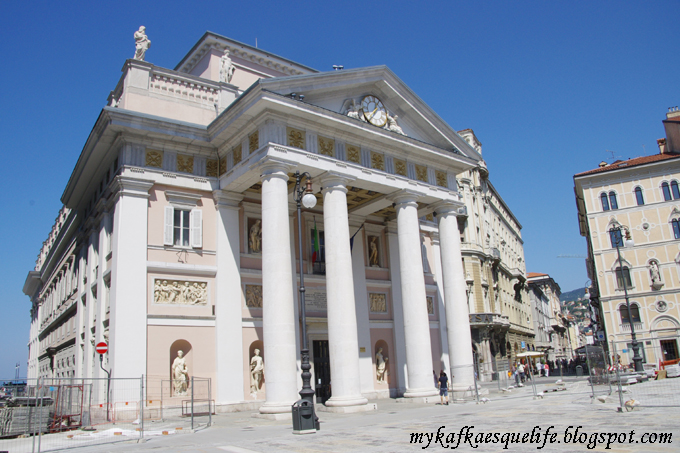
The current Chamber of Commerce in the shape of a neo-classical temple.

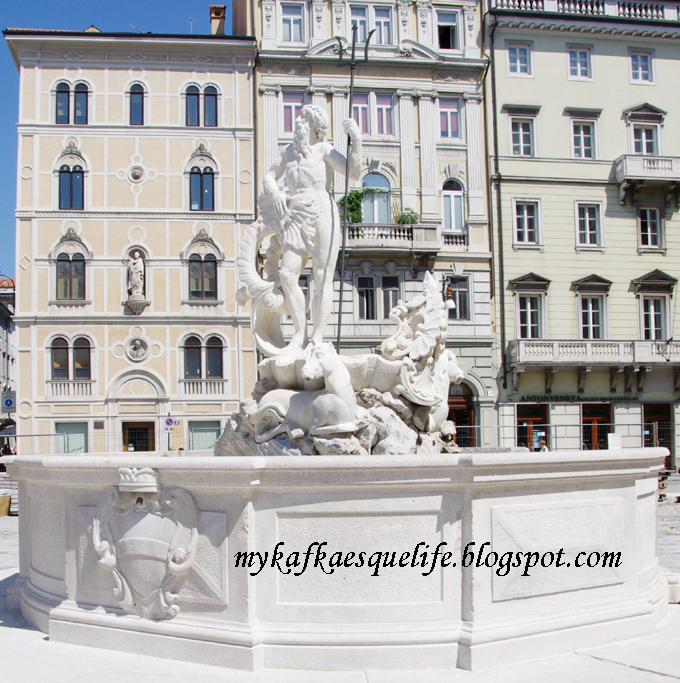
A fountain of Neptune, the God of the sea in the Roman mythology.

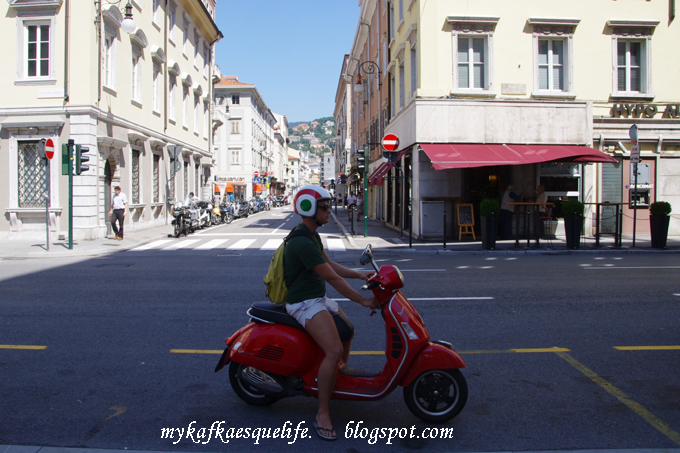
Typical Italian likes to ride a scooter. So does the typical Taiwanese.

We turned right here to go back to the old center.

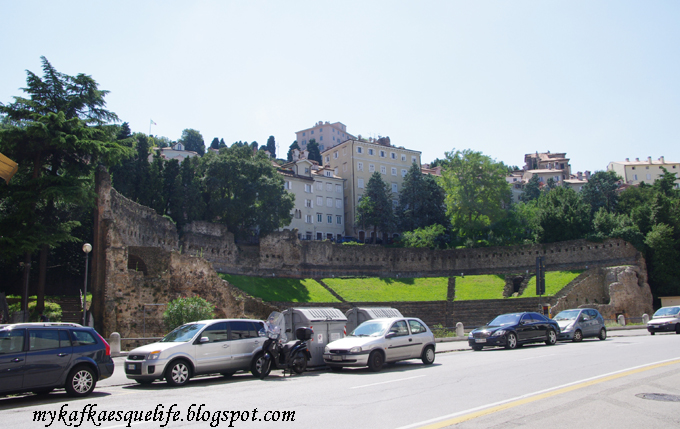
The old Roman theater (Teatro Romano).

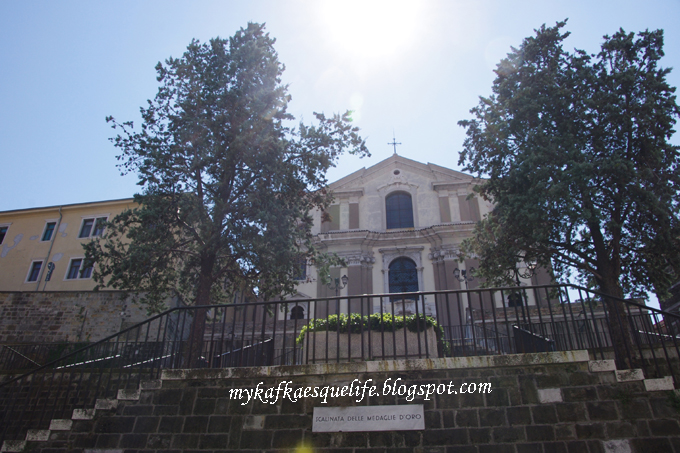
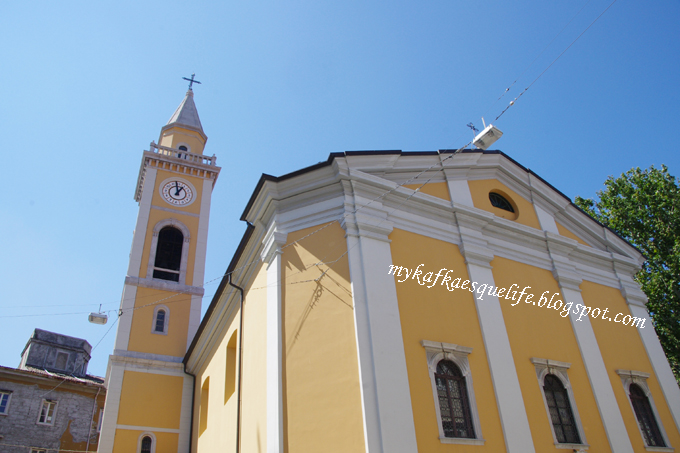
A church.

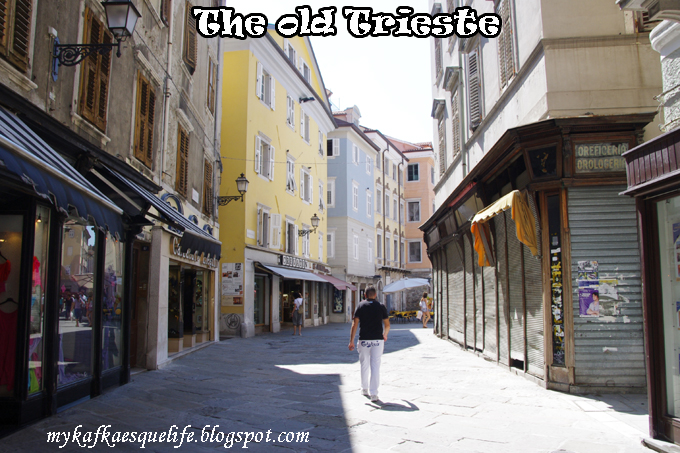
Then we entered the old medieval center of Trieste.

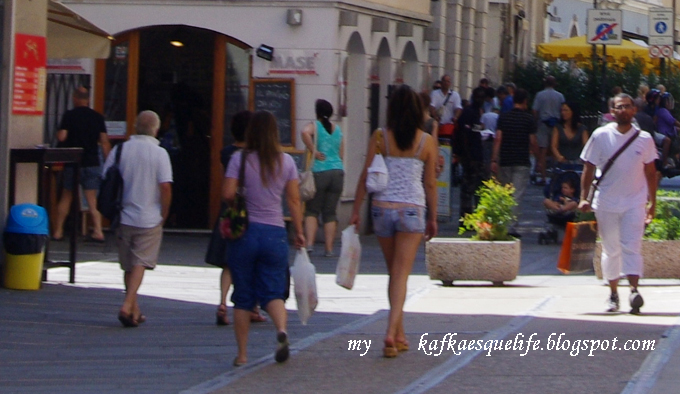
And we saw some lovely Italian bellezzas.

We didn't stay long here, we slowly walked back to our car.

A funny thing happened, when my girlfriend and I took a lot of photos of the buildings, an Italian man, who walked hand in hand with his girlfriend, passed by and told his partner: "Questo è Trieste!" (Which means "This is Trieste!"). I don't know what was his point, maybe that Trieste is so great, that tourist snap tons of pics? Or maybe, that we looked so cosmopolitan? Lol. No idea, but it was a funny moment to me.

A smaller church on the way back.

Cafés and restaurants.

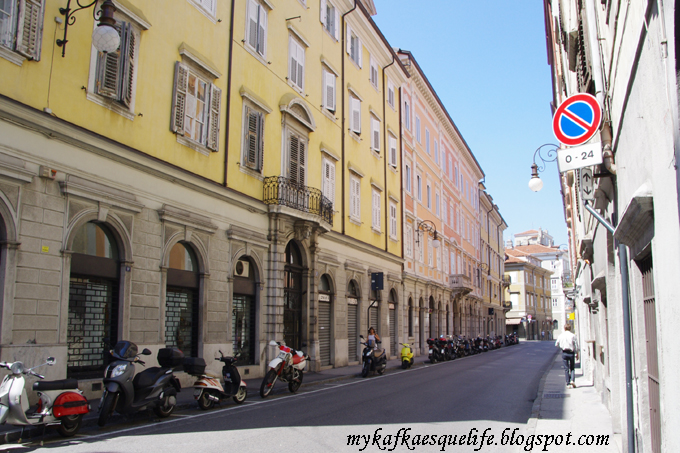
Old residential buildings.

We turned left after this statue and we were close to the car again.

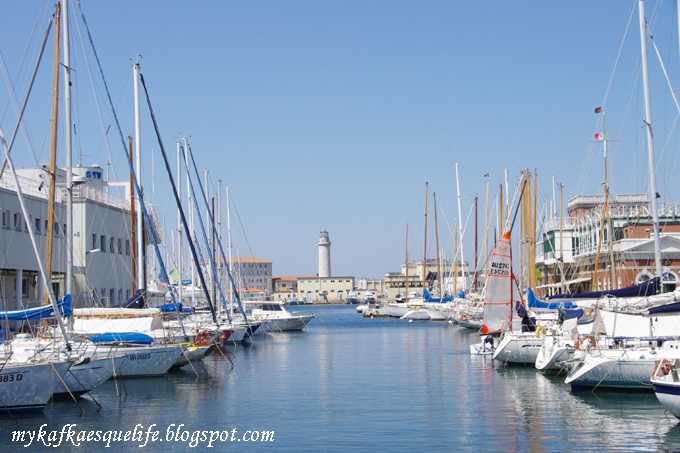
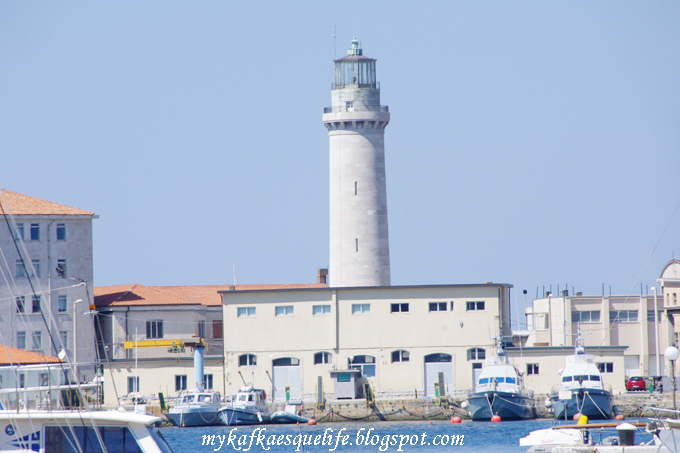
The Lanterna di Trieste, main lighthouse of Trieste.

Lighthouse closeup.

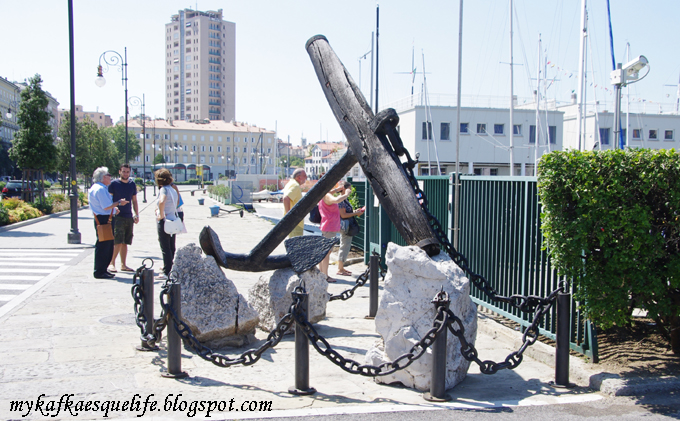
The symbol of Trieste is this old anchor.

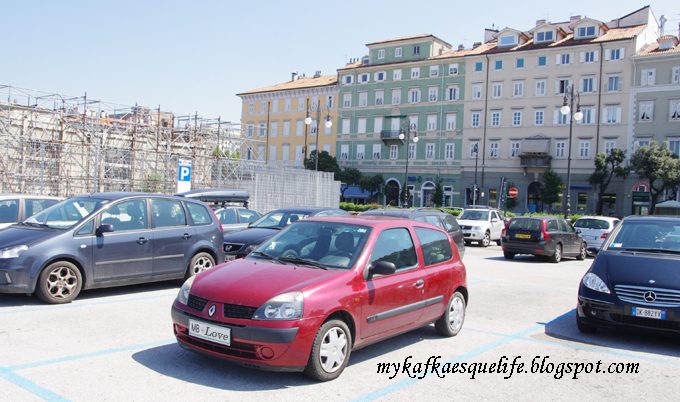
My lovely car waiting for us to take off. Next stop: Gorizia/Gorica.

It's funny that, the parking places in Trieste have ticket machines, which have a menu in Italian, English, German, French, but no Slovenian. Guess which foreign registry plates on cares were most common? Slovenian. That disappointed me a little. But all in all, Trieste was a positive surprise. It's pretty interesting and very big, full of history. I would certainly need 2 days to explore the center thoroughly, 2 hours were too little, but it gave me a good impression. As a Slovenian I now know how Trieste looks in 2010. Now I'm able to put some historic things into perspective. Will I revisit? Definitely yes one day.

My rating of Trieste/Trst:

Great place for photos ✰✰✰✰
Well preserved and clean ✰✰✰✰✰
Toilets, parking, souvenirs ✰✰✰✰✰
Friendly to tourists ✰✰✰✰✰
[My Slovenia page][All photos by MKL, 2010, except the first]